
Civil Lawyers in Noida for Property, Contract & Civil Dispute Matters
84 verified Civil advocates in Noida.
Civil advocates in Noida
84 of 84 shown
- Courts
- Debts Recovery Tribunal (DRT) Lucknow,…
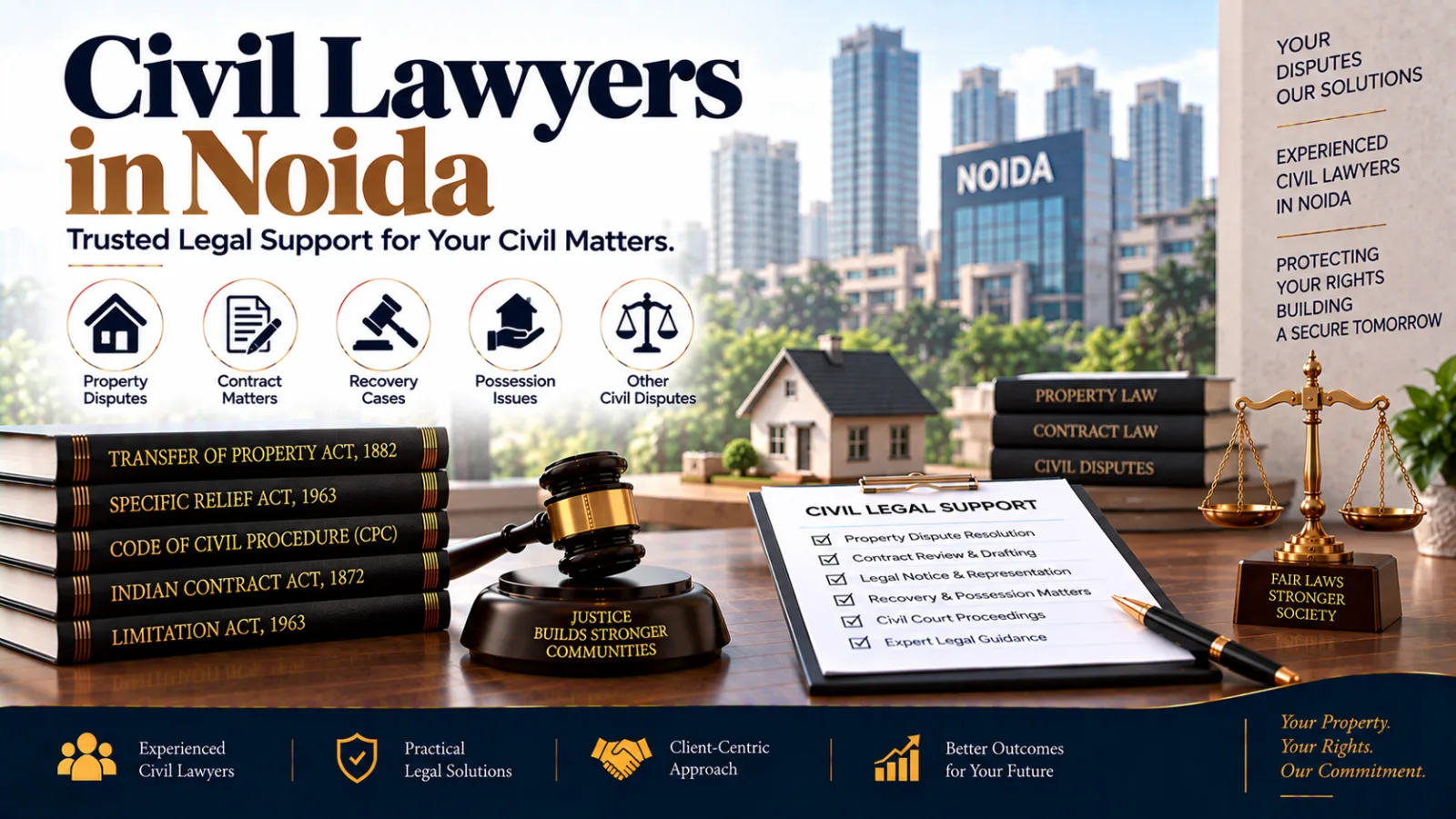
Civil disputes can arise from property transactions, unpaid dues, contractual disagreements, possession issues, partnership conflicts, recovery claims, and other matters involving private rights and obligations. A civil lawyer in Noida can help individuals, families, businesses, landlords, tenants, and other parties understand their legal position and choose an appropriate course of action based on the facts and documents available.
The first stage of a civil matter is often understanding exactly what has happened and identifying the legal right or obligation involved. Agreements, sale deeds, notices, invoices, payment records, correspondence, possession documents, and other evidence may be important. A lawyer can review these records, identify potential issues, and explain whether negotiation, a legal notice, mediation, or court proceedings may be suitable.
Property-related disputes are among the common areas handled by civil lawyers. These may involve ownership claims, possession, partition, boundary disagreements, sale agreements, landlord-tenant conflicts, or disputes concerning property documents. Since property matters can involve multiple documents and parties, carefully establishing the relevant facts and chain of documents can be important before taking legal action.
Civil lawyers also assist with contractual and money-recovery disputes. When one party does not perform an agreed obligation, delays payment, or allegedly breaches a contract, the affected party may need to assess the available remedies. Depending on the agreement and circumstances, a lawyer may help with drafting a legal notice, negotiating a resolution, pursuing mediation, or filing an appropriate civil proceeding.
If a civil case has already been filed, legal assistance may include preparing pleadings, reviewing evidence, responding to the opposing party's claims, handling procedural applications, and representing the client before the appropriate court or forum. The correct approach depends on the nature of the dispute, jurisdiction, limitation requirements, documents, and applicable law.
For anyone facing a civil dispute in Noida, obtaining legal advice before taking major action can help prevent avoidable procedural or documentation mistakes. A civil lawyer can assess the facts, explain the strengths and limitations of a case, and outline practical options. No legal outcome is automatic, and the result of a civil dispute depends on the evidence, applicable law, and findings of the competent court or authority.